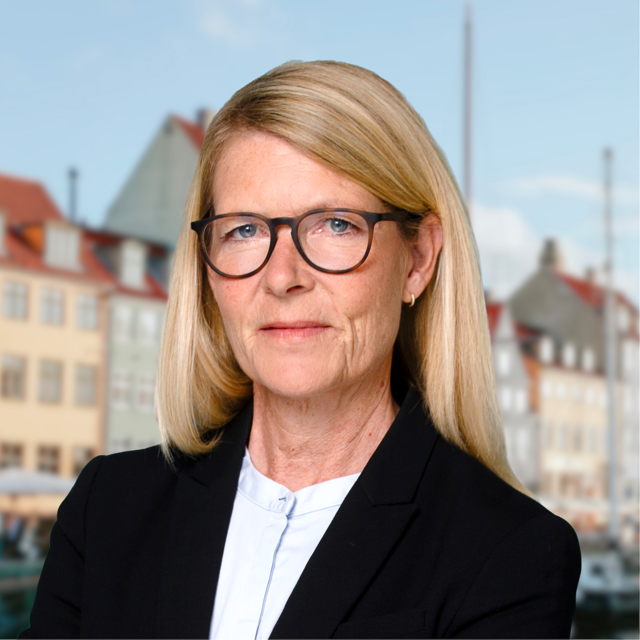
A Broader Vision of Diversity: A conversation with Natasha Friis Saxberg, Danish ICT Industry Association
A seasoned technologist shaping Danish ICT, Natasha Friis Saxberg has spent nearly three decades in technology - from hands-on network engineering to founding SaaS startups, from corporate ventures and helping companies enter the US market, to her role as Vice Chair of the Danish Quantum Community. She brings uncommon technical depth and entrepreneurial experience to industry leadership. She heads an association that represents more than 800 companies and 117,000 employees across ICT, telecom and related sectors, and has been repeatedly recognized among Europe’s most influential women in tech.
In conversation with Amrop's Kristine Cholewa, she shares her views on everything from server rooms to strategic influence.

From Server Rooms To Strategic Influence
Natasha Friis Saxberg began her career as an IT assistant engineer, specializing in networks, protocols and server operations - literally spending long hours in server rooms. Over time she transitioned into innovation, product development, startups and corporate venture, including years in the United States and stints as an entrepreneur and author. That rare trajectory: technical operator, founder, consultant and policy influencer, gives her a pragmatic perspective on both the daytoday realities of technology and the policy, market and organizational levers that scale impact.
Expanding the Definition of Diversity
Central to Natasha’s leadership is a deliberate move away from a "one dimensional" view of diversity. While gender remains important, she argues that focusing solely on gender misses other crucial dimensions: neurodiversity, age, educational background, geography, socioeconomic status and different life experiences.
Natasha contends that the future labor shortage and changing demographic realities demand an inclusive definition of diversity that helps organizations attract, accommodate and retain talent across many axes. Only by widening the lens can companies build resilient talent pipelines and avoid excluding skilled people who fall outside traditional hiring stereotypes.
Why Multidimensional Diversity Matters
Natasha describes multiple imperatives for this broader approach. Birth rates and demographic trends mean labor supply will tighten, so relying on a single recruitment pool is no longer viable. Increasing awareness and diagnosis of neurodiverse traits - and the fact that workplaces can exclude people with sensory or cognitive needs - requires design choices that make work accessible.
Older workers face real age discrimination and barriers to reentry, despite bringing valuable experience. Finally, people with different educations and career paths can offer complementary perspectives that strengthen innovation. For Natasha, diversity is a strategic advantage as well as a moral imperative.
Practical Programs That Move the Needle
Under her leadership the Danish ICT Industry Association is running concrete interventions. A mentoring program pairs young women with experienced industry leaders to improve retention, career navigation and confidence during early career stages. Coding classes for 6th and 7th graders, taught equally to girls and boys, aim to expose children to programming before gendered role expectations crystallize.

Natasha’s core advice is optimistic and practical: tech is not a single career - it is an ecosystem of roles, skills and trajectories. If you enjoy learning, change and problem solving, you will find opportunities. She emphasizes that the industry offers nonlinear development paths; where you start often differs from where you end. For career changers, the message is to explore, try roles, and build transferable skills rather than assume there is only one acceptable background for success.
Technology Trends and Societal Priorities
Natasha highlights several trends that will shape demand for skills and opportunities in the years ahead. Climate and sustainability stand out: tech will be central to green transition, mitigation and adaptation, creating roles that combine domain knowledge with digital capabilities. Artificial intelligence is already transformative and will continue to change how we work, learn and deliver services; its full societal effects will take years to unfold.
Quantum computing is another inflection point she watches closely - anticipating faulttolerant quantum machines within five to ten years that could upend industries requiring massive computational power, including pharmaceuticals, logistics and finance. She also sees renewed interest in blockchain technologies, not merely cryptocurrencies but architectures that enable new business models and trust frameworks.
AI, Bias and Ethical Hygiene
On AI and fairness, Natasha urges a balanced, context driven approach. Fundamental “hygiene” factors - privacy, explainability, transparency and appropriate risk classification - must be embedded into development and deployment. She emphasizes that AI does not invent bias; it surfaces and can amplify the biases present in training data and human processes.
The right response is to clean data, supervise models and apply proportionate safeguards based on the application’s criticality: recommending restaurants is different from diagnostic tools in healthcare. Natasha supports sensible regulation such as the EU AI Act as a framework to distinguish risk levels and ensure organizations adopt context-appropriate controls. Crucially, she argues, ethical safeguards should enable responsible use rather than stall adoption of tools that can save lives or dramatically improve public services.
Balancing Urgency and Prudence
Natasha is impatient with paralysis-by-fear. She points to clear, lifesaving use cases - for example, AI that can screen common cancers at or above physician accuracy and prioritize patients for quicker care - to illustrate the human cost of delayed implementation. Her stance is to balance risks against concrete benefits, implement ethical guardrails, and scale what works so technology can deliver measurable social value.
Leadership, mentorship and culture
For Natasha, leadership in tech is about creating systems where diverse people can contribute and thrive. She emphasizes mentorship and organizational narratives that showcase varied career models. Rather than prescribing single remedies, she advocates layered approaches: policy and regulation, workplace design that accommodates neurodiversity and age diversity, educational outreach, and visible role models. Cultivating curiosity, humility and a willingness to iterate are cultural traits she values in organizations that successfully navigate change.
Looking forward Natasha Friis Saxberg envisions an industry that embraces a broader definition of talent, moves decisively but ethically with new technologies, and focuses on practical interventions that expand access and retention. Her leadership connects tactical programs - mentoring, early education and career communication - with strategic foresight about climate tech, AI, quantum computing and blockchain. She urges organizations to act: adopt ethical standards, experiment responsibly, redesign workplaces for diverse needs, and tell more inclusive career stories.
When it comes to technology as leverage for social value, Natasha’s message is both optimistic and urgent: technology can and should accelerate positive change, but it requires inclusive thinking, practical programs, and ethical rigor. By widening how we define diversity and by responsibly harnessing powerful technologies, she argues, the ICT sector can deliver significant business, social and environmental value while opening tech careers to many more people. Her career, technical, entrepreneurial and institutional, exemplifies the kind of multifaceted leadership she champions: grounded in experience, focused on impact, and oriented toward inclusive progress.
Contact